ACID Transactions in DBMS Explained (MongoDB)
The Big Myth: Why NoSQL Doesn't Mean "No ACID" Anymore
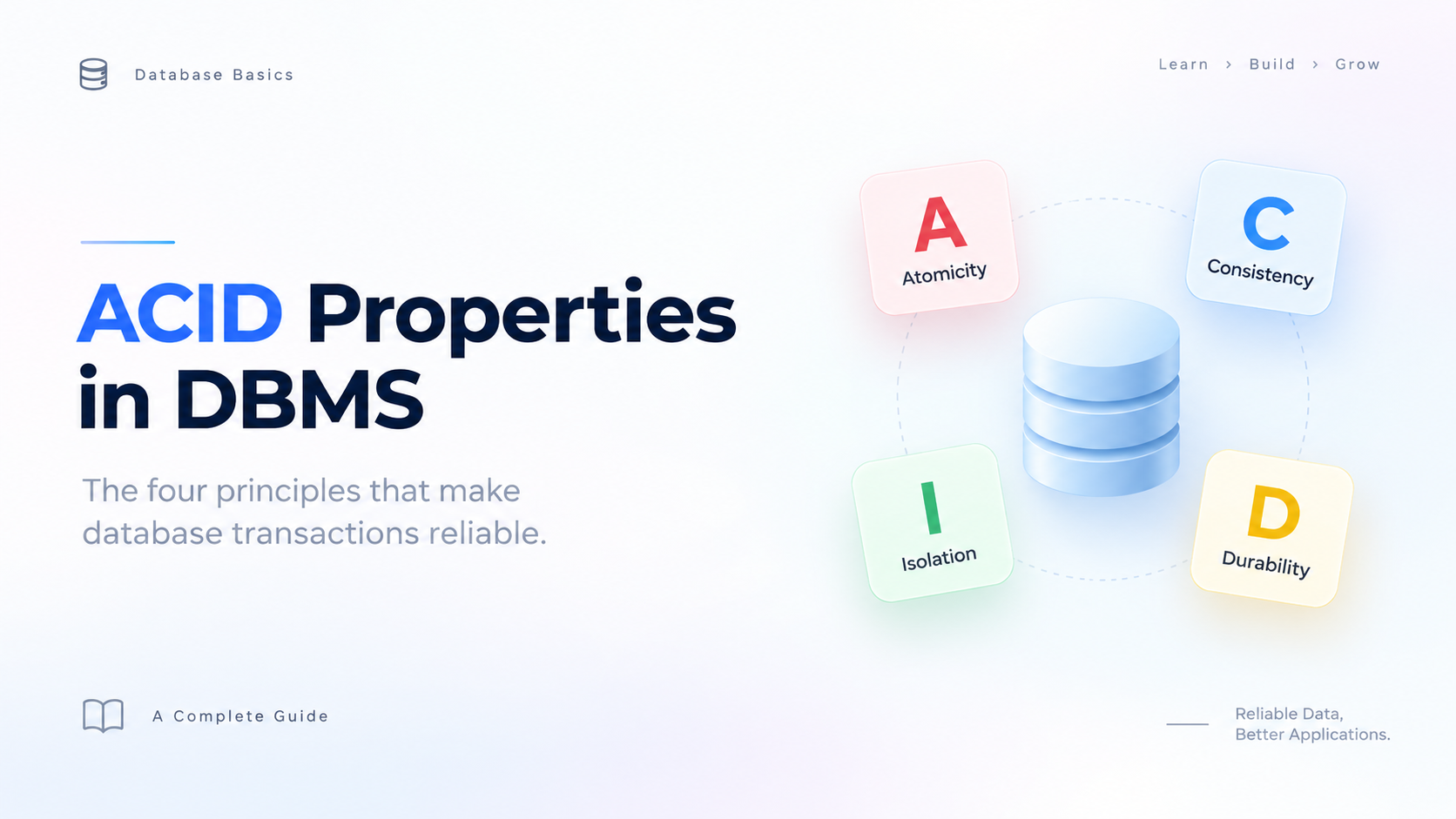
If you're building out a full-stack application today maybe wiring up a Node.js backend or pulling server-side data in Next.js - you've probably had to make the database choice. For years, the conventional wisdom in the developer community was rigid: Use SQL if you care about your data integrity, use NoSQL if you just want to scale fast and dump JSON into a bucket.
But let's be real. That assumption is wildly outdated.
Scaling horizontally doesn't mean you have to sacrifice data integrity. I was recently digging through some architectural docs and realized how many developers still don't know that MongoDB has supported robust, multi-document ACID transactions for years.
Let's break down exactly what ACID means in the real world, how it evolved, and how MongoDB manages to deliver strict data guarantees without losing its NoSQL flexibility.
(Note: A lot of the foundational architecture in this post is based on MongoDB's official guide to ACID transactions, which is a fantastic resource if you want to go deeper).
A Quick History Lesson: Where Did ACID Come From?
Before we talk about modern document databases, we need to look back at the late 1970s and early 1980s. As businesses started relying on digital records for banking and telecommunications, they needed absolute guarantees that their data wouldn't corrupt if a server crashed mid-operation.
In 1983, computer scientists Andreas Reuter and Theo Härder formally defined the four ACID properties. This framework became the undisputed gold standard for relational database management systems (RDBMS) like Oracle, IBM DB2, and eventually PostgreSQL.
When NoSQL databases rose to popularity in the 2010s to handle massive, unstructured datasets, early versions did relax consistency in favor of raw performance. That created the myth that NoSQL and ACID were mutually exclusive. But as distributed systems evolved, vendors like MongoDB figured out how to engineer multi-document transactions across distributed nodes.
What is ACID, Exactly? (And How MongoDB Handles It)
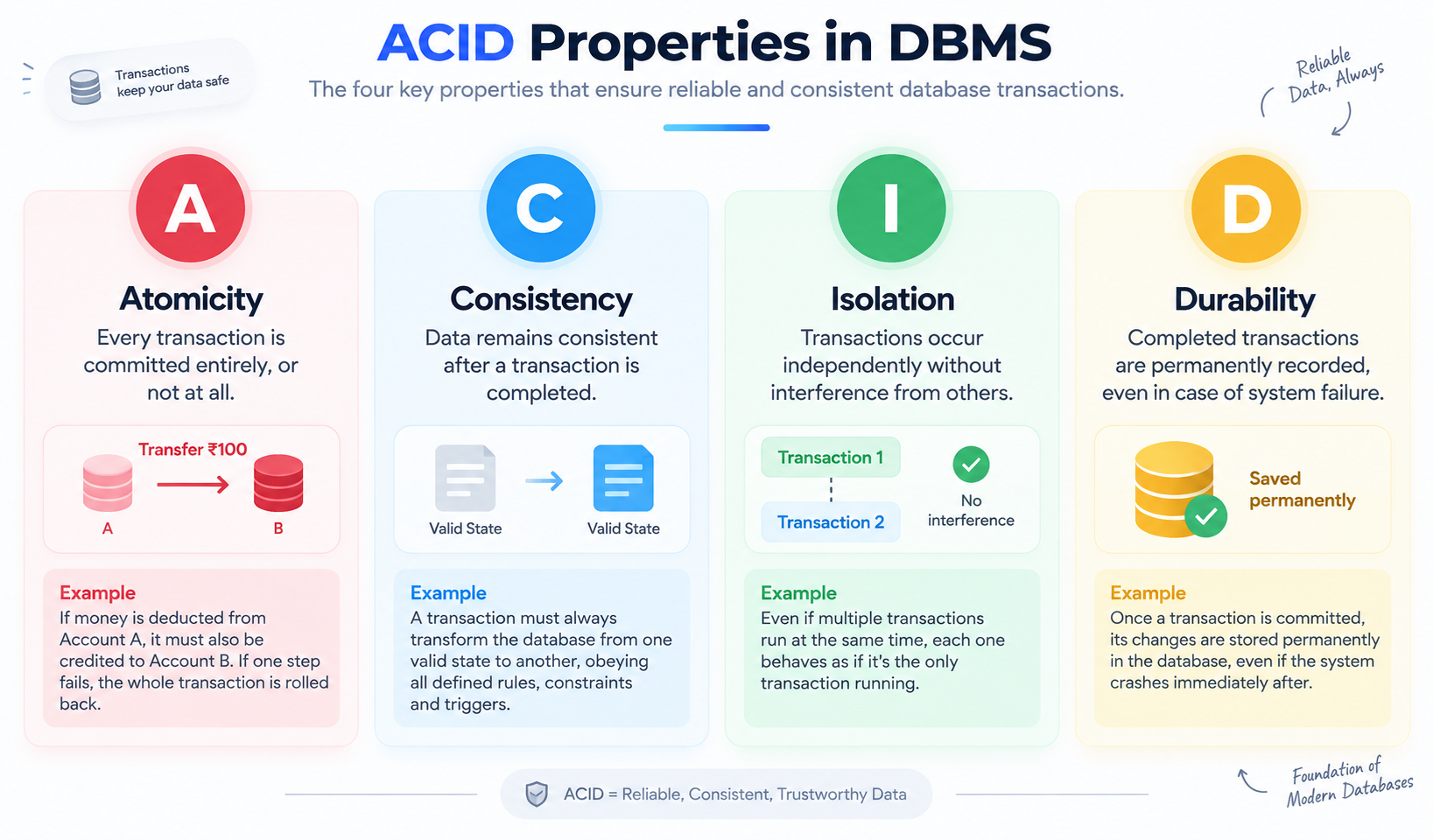
ACID stands for Atomicity, Consistency, Isolation, and Durability. Together, they ensure that a transaction - a grouped set of read/write operations - leaves your database in a valid state even if everything catches on fire.
Here is how a document database handles the classic RDBMS rules:
1. Atomicity: The "All or Nothing" Rule
Atomicity guarantees that if a transaction fails halfway through, the entire thing is rolled back. If a user is paying for a premium subscription in your app, the database needs to debit their account and upgrade their user role. If the role upgrade fails, the money shouldn't be deducted.
The MongoDB Way: Because MongoDB is a document database, a write operation is atomic at the document level. If you embed arrays and sub-documents directly inside a single user document, updating all that nested data is fully atomic by default. For the rare cases where you absolutely must update multiple separate collections simultaneously, MongoDB supports distributed multi-document transactions across replica sets and sharded clusters.
2. Consistency: Obeying the Laws of the Schema
Consistency ensures that any transaction brings the database from one valid state to another, strictly adhering to defined rules and constraints.
The MongoDB Way: MongoDB gives you flexibility in how you achieve this. If you have related data, you can:
Use Transactions: Updates to multiple collections occur in one atomic operation. You get perfect consistency, but it can impact performance if there's heavy read contention.
Embed Related Data: Just shove the related data into a single document. This is highly performant and keeps everything consistent without complex joins.
Use Atlas Database Triggers: Update one collection, and let a background trigger update the other. Great for performance, but you have to be okay with eventual consistency (users might see slightly stale data for a few milliseconds).
3. Isolation: Staying in Your Lane
Isolation prevents concurrent transactions from interfering with each other. If two users try to book the exact same movie seat at the exact same millisecond, the database shouldn't crash or double-book.
The MongoDB Way: MongoDB uses a technique called snapshot isolation. When a transaction starts, it takes a private, virtual snapshot of the database. The transaction operates on this isolated view. If it tries to commit and the lock manager detects that another operation has modified the same data in the meantime, the transaction is safely aborted to prevent a conflict.
4. Durability: Written in Stone
Durability means that once a transaction says "committed," it's permanent. Even if someone trips over the server's power cord a microsecond later, that data will be there when the machine boots back up.
The MongoDB Way: MongoDB achieves this through a combination of write-ahead logging (the journal) and distributed replica sets. Before a change is finalized, it's written to an on-disk journal. Furthermore, you can configure your write concerns so that a transaction isn't considered "complete" until it has successfully replicated to a majority of your backup nodes.
When Should You Actually Use Distributed Transactions?
Just because you can use multi-document transactions in MongoDB doesn't mean you always should.
If you are coming from a traditional SQL background (like PostgreSQL or MySQL), your instinct is usually to normalize everything into separate tables and use transactions to tie them together.
In MongoDB, 80% to 90% of your transactional needs can be solved by simply designing a better schema. Because documents can contain rich, hierarchical data structures, you can often keep related data together.
Reserve multi-document transactions for the edge cases:
Financial Ledgers: Transferring balances between two isolated account documents.
Complex Inventory Systems: Deducting stock from a central inventory collection while simultaneously creating a detailed order in an orders collection.
Strict Regulatory Compliance: When the law dictates that multi-system data must be perfectly synced with zero tolerance for eventual consistency.
The Takeaway
The database landscape isn't black and white anymore. You don't have to choose between the developer-friendly flexibility of document schemas and the iron-clad safety of ACID compliance. If you structure your data correctly, you get atomicity out of the box. And when you need to bring out the big guns for multi-collection transactions, the architecture is already there waiting for you.
For a deeper dive into the specific lock mechanisms and performance impacts, check out the original MongoDB resource on ACID transactions.